
 (866) 336-6372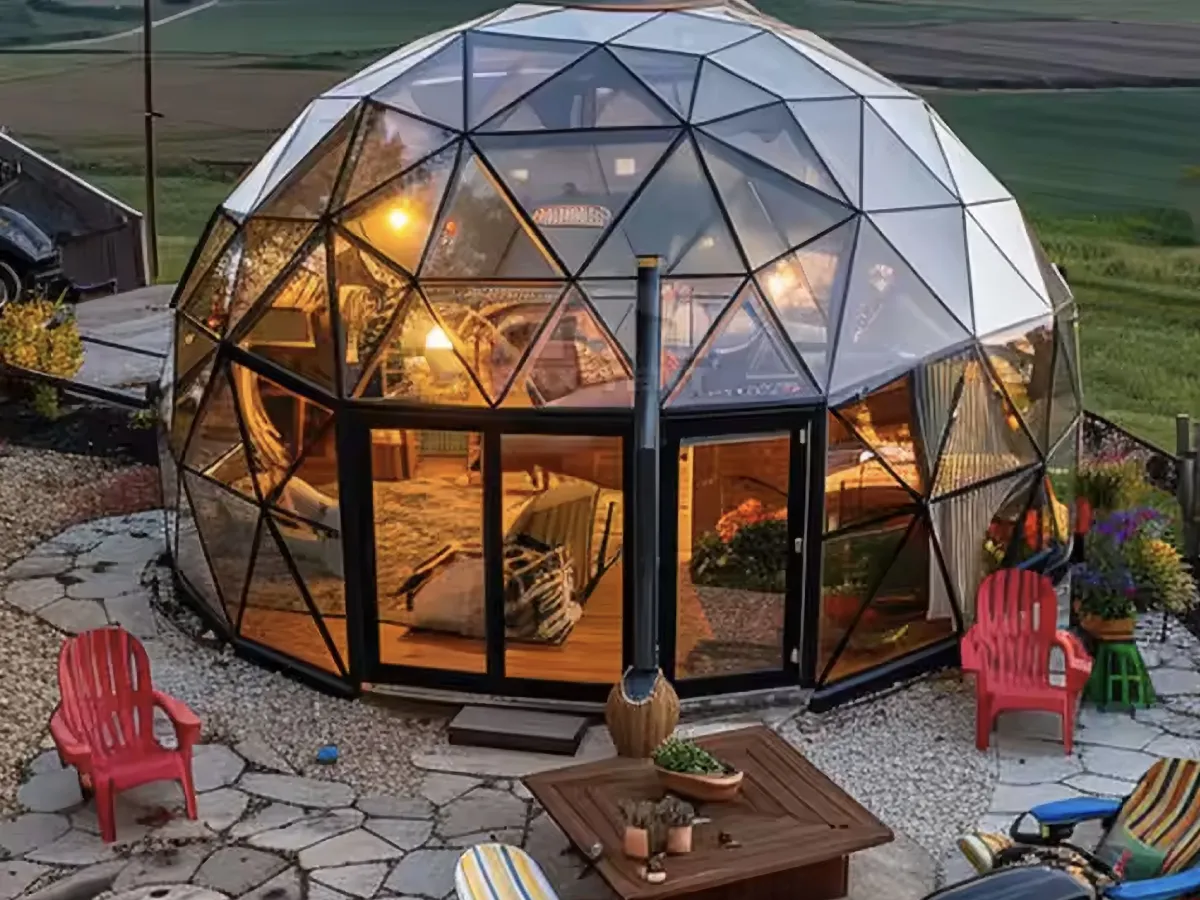
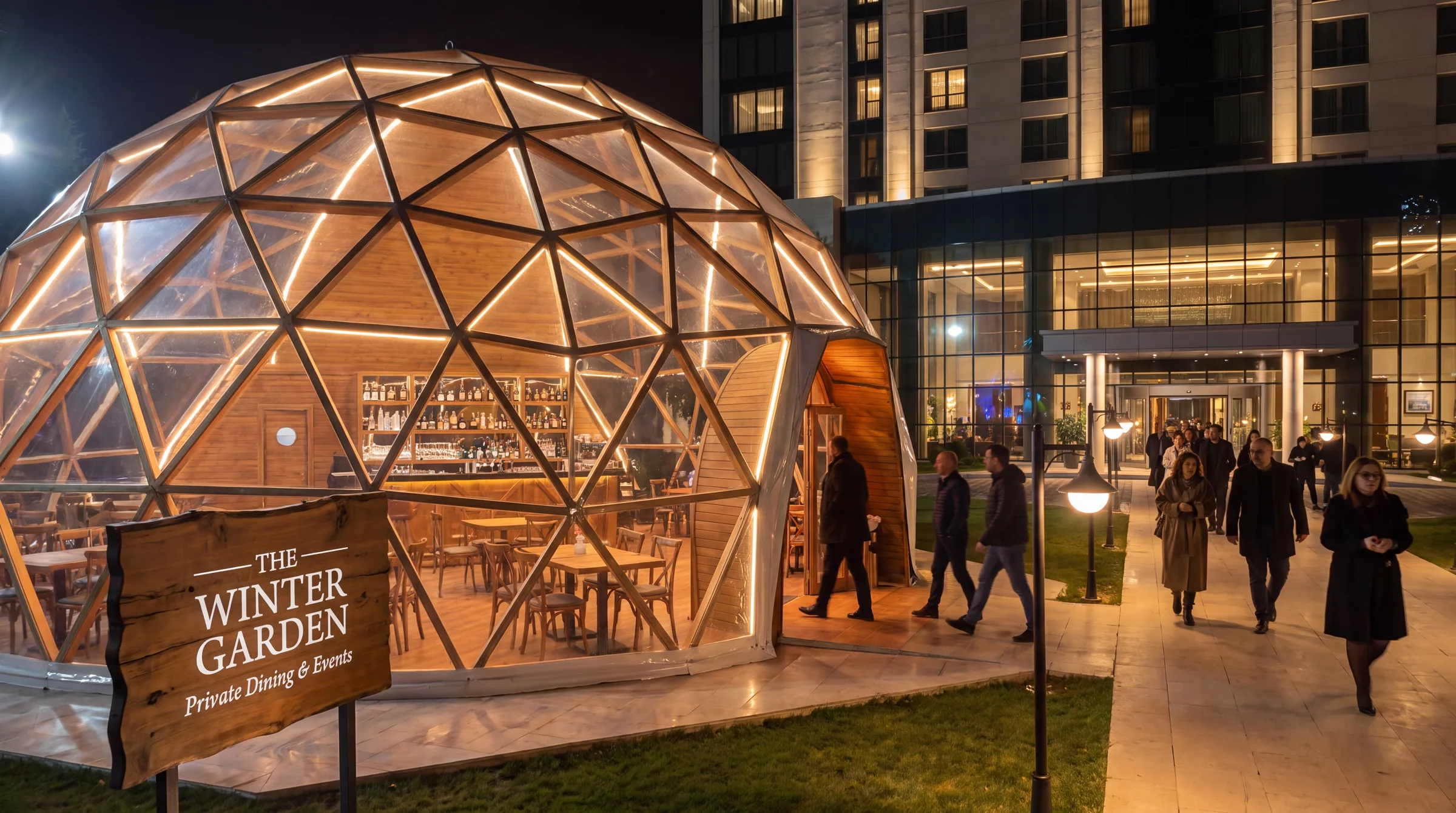

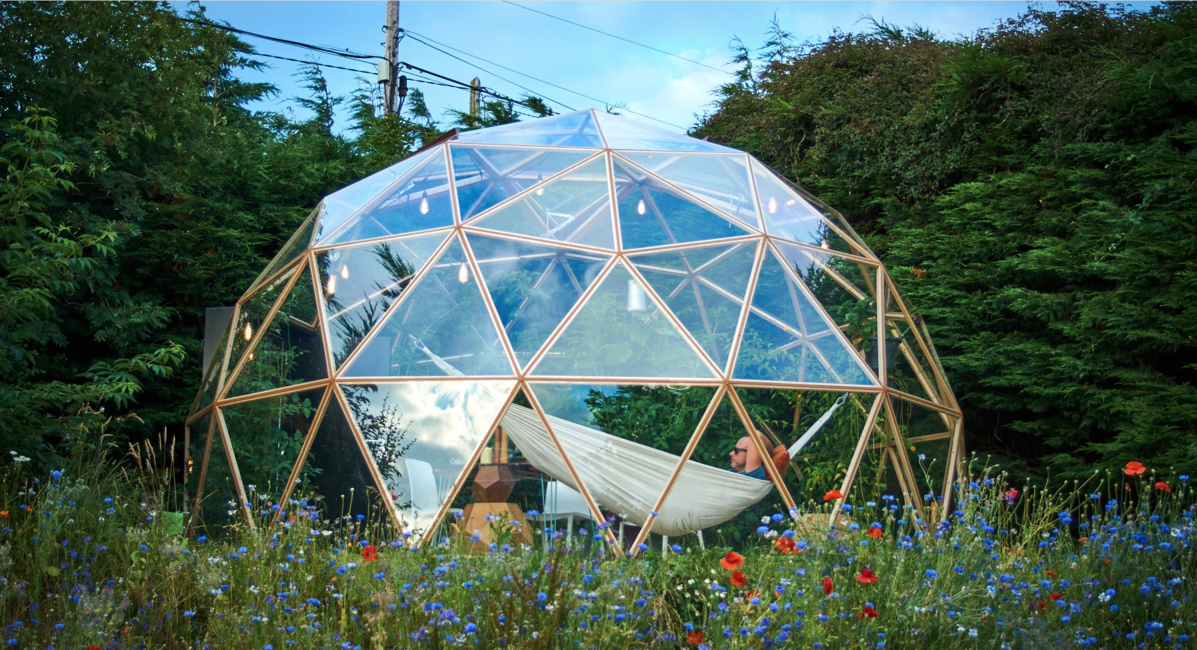
Geodesic glass dome structures are more than an architectural wonder; they are a practical, efficient, and beautiful option for various applications. From greenhouses to homes and event spaces to research stations, geodesic domes offer unique benefits that traditional structures cannot provide.
The Science Behind Geodesic Glass Domes
Developed by inventor Buckminster Fuller, geodesic domes use a network of triangles that efficiently distribute weight and tension, making them both strong and lightweight. This structural design minimizes material use while maximizing interior space.
Advantages of Geodesic Glass Domes
- Enhanced Strength: The triangular framework evenly distributes stress, making geodesic domes resistant to extreme weather.
- Energy Efficiency: The shape minimizes heat loss, optimizes solar gain, and reduces energy expenses.
- Spacious Interior: The open floor plan eliminates the need for internal support beams, maximizing usable space.
- Eco-Friendly: Uses fewer materials than traditional buildings and can incorporate renewable energy technologies.
- Maximizing Natural Light: Glass paneling allows for ample daylight penetration, reducing reliance on artificial lighting.
How Do Geodesic Glass Domes Compare to Traditional Structures?
| Feature | Geodesic Glass Domes | Traditional Structures |
|---|---|---|
| Strength | High wind & snow resistance | Requires reinforcements |
| Energy Efficiency | Optimized heat retention | More heat loss through flat surfaces |
| Interior Space | No internal beams | Requires supporting walls |
| Construction Cost | Lower material waste | Higher material consumption |
| Sustainability | Environmentally friendly | More resource-intensive |
Strength vs. Weight Ratio
There’s no structure better equipped to endure tough weather than a geodesic dome. The following graph compares the weight-bearing capacity per square foot of different structures:
| Structure Type | Weight-Bearing Capacity (lbs/sq ft) |
|---|---|
| Geodesic Glass Dome | 450 |
| Steel Frame Building | 350 |
| Concrete Structure | 300 |
| Wood Frame Building | 180 |
| Yurt | 120 |
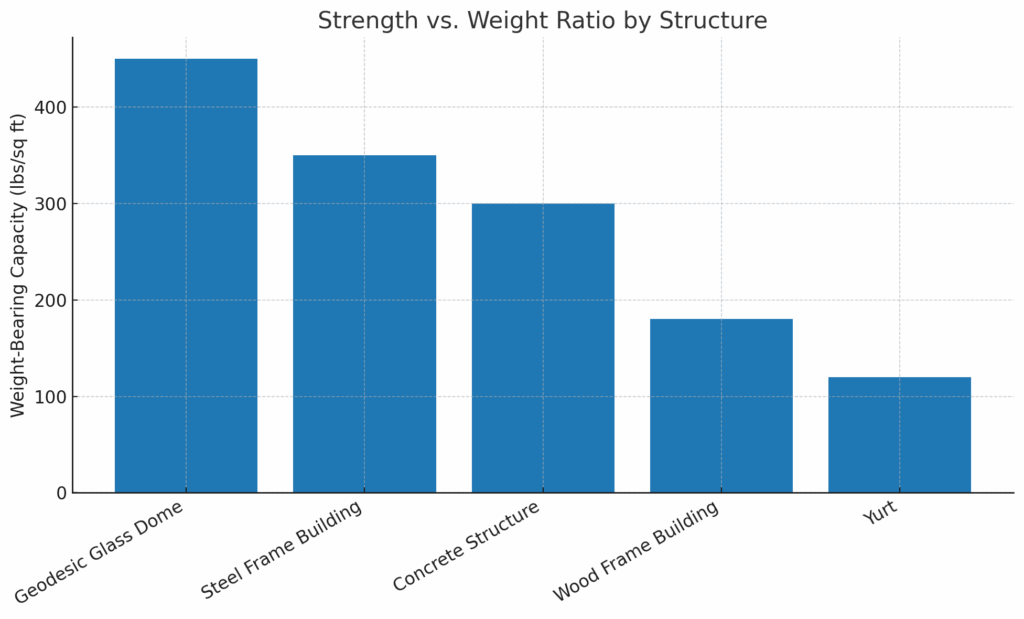
[Graph: Strength-to-Weight Ratio Comparison]
Applications of Geodesic Glass Domes
Geodesic domes have a wide range of applications:
- Greenhouses – Great for controlled agricultural environments.
- Eco-Resorts – Unique, sustainable vacation accommodations.
- Event Spaces – Futuristic venues for weddings, conferences, and exhibitions.
- Research Stations – Best suited for remote locations with extreme environments.
- Homes – Modern, energy-efficient, and visually impressive.
Cost Efficiency Breakdown
| Expense Category | Geodesic Glass Dome | Traditional Building |
|---|---|---|
| Material Cost | Lower due to minimal structural needs | Higher due to traditional framing |
| Energy Costs | Reduced due to insulation & solar gain | Higher due to heat loss |
| Maintenance | Minimal due to durable structure | Higher due to wear & tear |
Energy Efficiency in Numbers
A study compared energy costs between a geodesic glass dome and a conventional house. The following percentages show the savings in heating and cooling costs:
| Energy Type | % Savings with Geodesic Dome |
|---|---|
| Heating Costs | 45% |
| Cooling Costs | 30% |
| Overall Annual Energy Costs | 38% |
Is a Geodesic Dome Right for You?
If you’re looking for a resilient, energy-efficient, and eco-friendly structure, geodesic glass domes offer unmatched advantages. They are stronger, more cost-effective, and aesthetically striking compared to traditional buildings, making them an excellent choice for modern construction.
Whether you’re constructing a greenhouse, home, or commercial building, geodesic domes stand out as a better, stronger, and more sustainable option for the future.