
 (866) 767-3117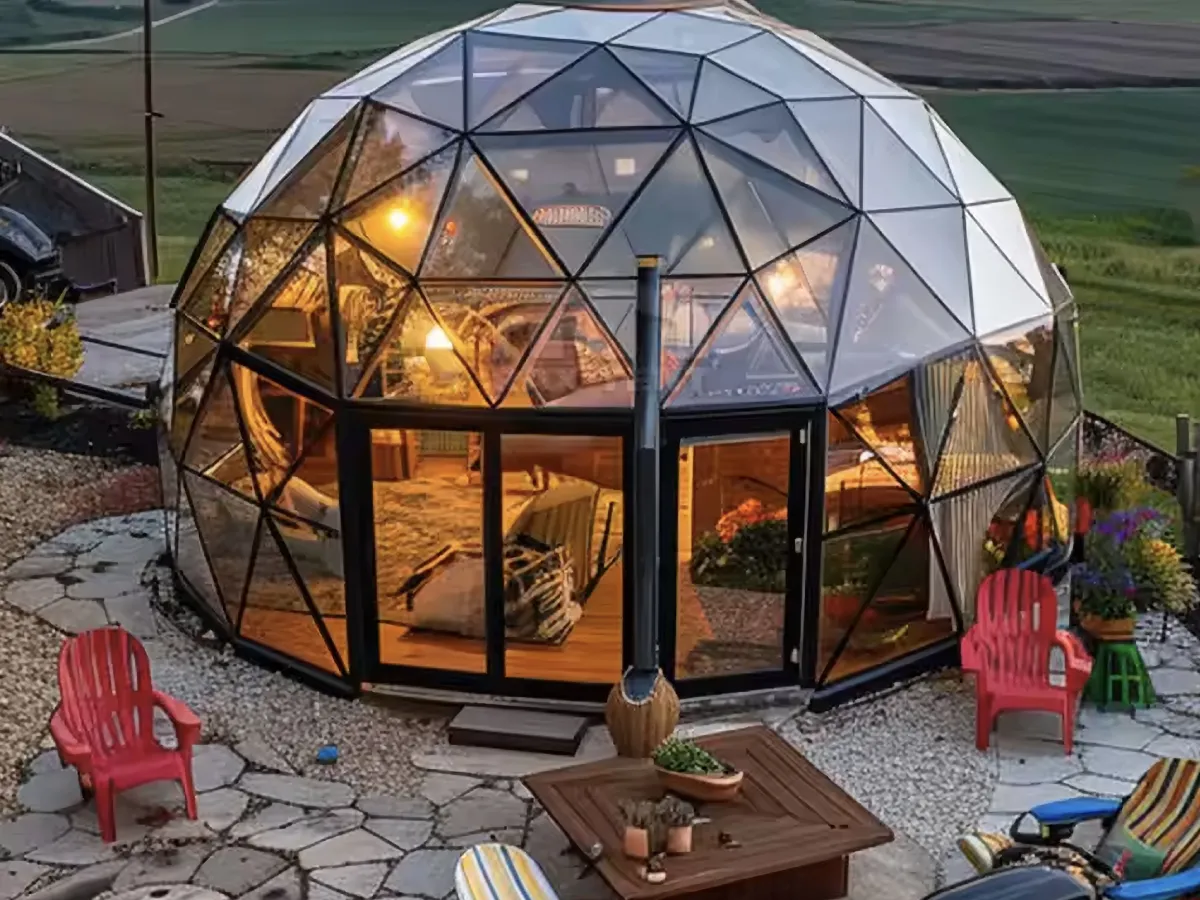
Planning guide · Brand activations
Brand Activation Structures Compared: Tents, Containers, Inflatables & Domes
Experiential teams choose between five families of temporary structure, and each wins some briefs and loses others. Here’s a fair comparison of how they differ on branding, enclosure, light, and reuse, so the format fits the idea.
In short
A brand activation structure is a temporary building or enclosure that carries a brand experience: a place visitors walk into, with an exterior that works as media. The main families are frame and clearspan tents, shipping-container builds, modular pavilions, inflatables, and geodesic or projection domes.
The five families
Most activation briefs can be delivered in more than one family. The difference is what the structure itself contributes: how far away people notice it, what it’s like inside, and how it travels.
- Frame and clearspan tents: flexible footprints, walls and roofs for graphics, and wide availability
- Shipping-container builds: rugged, stackable, and industrial in character, but heavy to move
- Modular pavilions: architectural panels and glazing with a finished-building look
- Inflatables: bold, sculptural shapes with fully printed skins
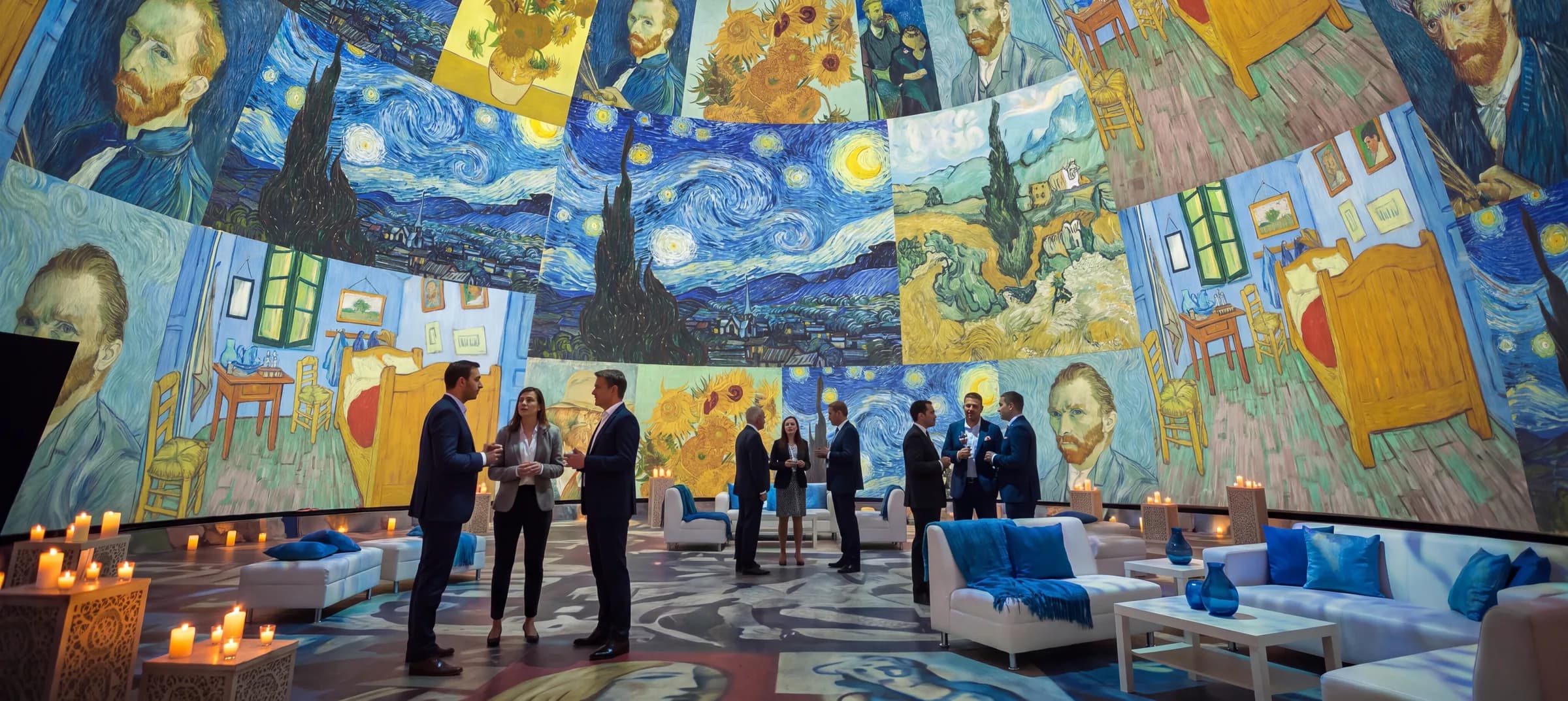
- Geodesic and projection domes: a landmark silhouette, an open interior, and an optional 360° projection surface
Skin branding and sightlines
Ask what the exterior can carry. Flat panels and walls take conventional graphics; printed fabric skins and covers can wrap an entire shape. On a crowded site, think about how the structure reads from a distance: silhouette and height often matter as much as the graphic.
Enclosure, light, and media
Open structures pull people in; enclosed ones hold them. If the experience depends on projection, screens, controlled sound, or a timed reveal, an enclosed format with opaque walls or covers keeps the light and noise where you want them.
Projection needs darkness to look its best, while LED holds up better in ambient light. Immersive event spaces compares the options.
Touring and reuse
A structure that visits several cities should set up the same way each time and pack efficiently. Reusable printed skins and covers keep the brand consistent across stops. Transport, storage between stops, and each site’s conditions belong in the brief from the start.
Indoor or outdoor
Indoors, confirm ceiling clearance, floor load, fire rules, and the working room installation needs. Outdoors, plan for wind, rain, level ground, power, and anchoring or ballast set by the engineering for the site. Some formats suit one setting better than the other, so ask each supplier for both sets of requirements.
Where each format wins
A short version of the comparison below:
- Tents and clearspan structures: large footprints and flexible layouts
- Containers: an industrial look, retail-style counters, and lockable units
- Modular pavilions: a premium, building-like presence for longer runs
- Inflatables: bold visual impact and fully printed sculptural shapes
- Domes: a landmark shape, an open interior, and projection built into the room
Compare
Activation structure decision grid
The eight questions that usually decide the format.
| Format | Visual impact | Skin branding | Enclosure | Ambient-light control | Portability | Repeat use | Footprint | Installation |
|---|---|---|---|---|---|---|---|---|
| Frame or clearspan tent | Familiar | Wall and roof graphics | Open, or enclosed with sidewalls | Good with solid walls | Good | Good | Flexible: sections extend the length | Moderate |
| Shipping container | Industrial and bold | Full exterior wraps | An enclosed box | Good | Heavy: trucks and lifting equipment | Good | Fixed module sizes | Moderate to high |
| Modular pavilion | Architectural | Panels and glazing | Enclosed | Good with solid panels | Moderate | Good | Moderate | Higher |
| Inflatable | Sculptural and high | Fully printed skins | Enclosed | Good with opaque skins | Light and compact | Good | Fixed shapes per design | Lower; many designs need blowers and power |
| Geodesic or projection dome | A landmark silhouette | Printed and branded covers | Enclosed: clear, translucent, or blackout | High with blackout covers | Designed for repeated setup and teardown | Reusable frame and covers | Standard sizes from 20 to 60 ft | Installation crew and equipment, quoted per site |
General characteristics for early planning, not specifications. Details vary by supplier, model, size, and site, so confirm each one with the vendor.
Choosing
When a pop-up tent is enough, and when it isn’t
A premium structure is the wrong answer for plenty of activations.
A simple pop-up is the better answer when
- The activation is a sampling table or a small booth, not a destination
- You need shade and a counter for a single day
- A standard 10×10 or 20×20 tent from a local rental company does the job
- The budget is tight and the story lives in the staffing and the product
A premium structure earns its place when
- The structure is the headline and should be noticed across the site
- The experience needs an enclosed room: projection, sound, or a timed reveal
- The activation will tour and should arrive identical in every city
- The brand needs full creative control of the exterior
- A long run or the weather calls for more than a pop-up canopy
The Dome House
Where domes fit
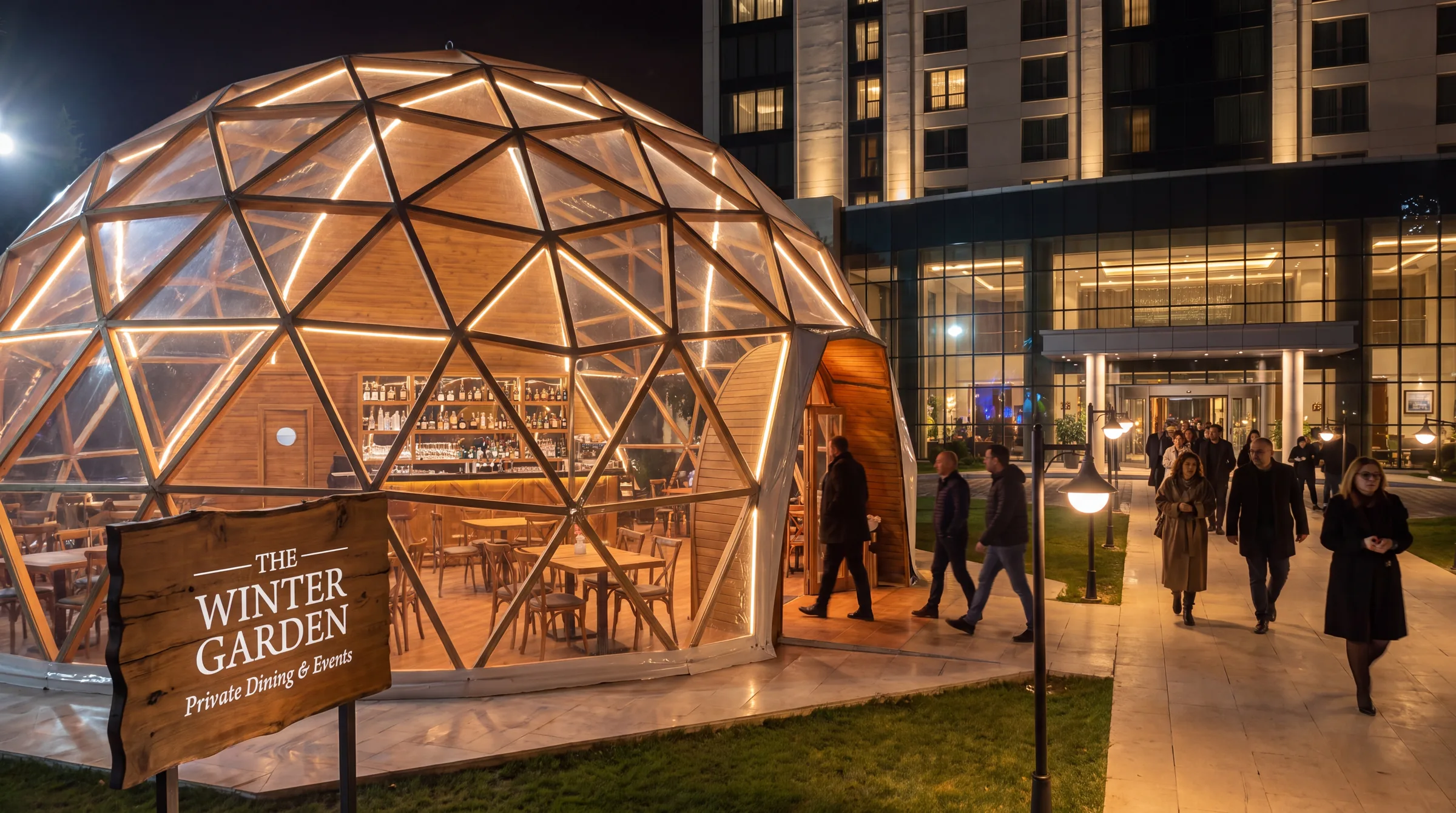
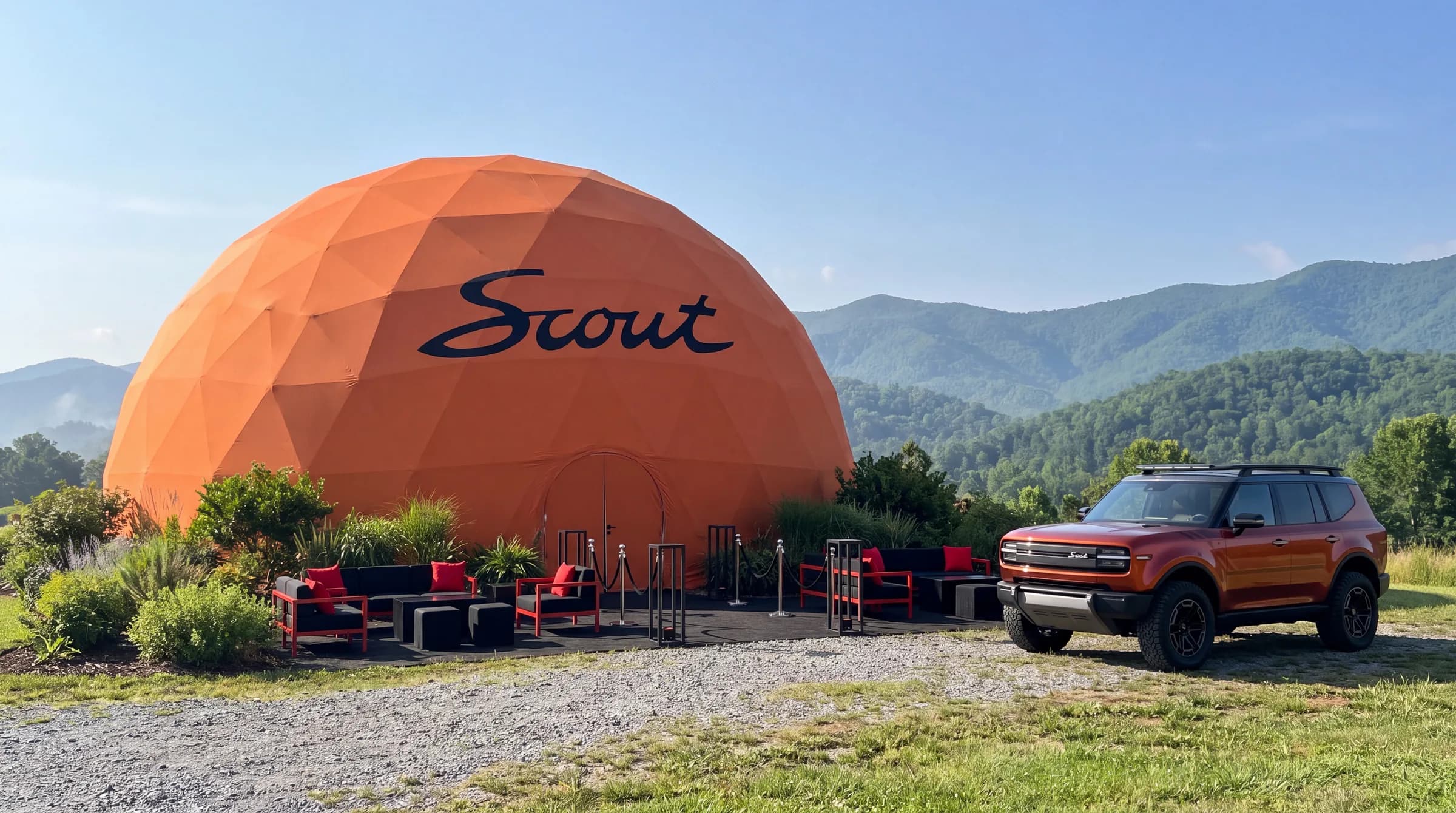
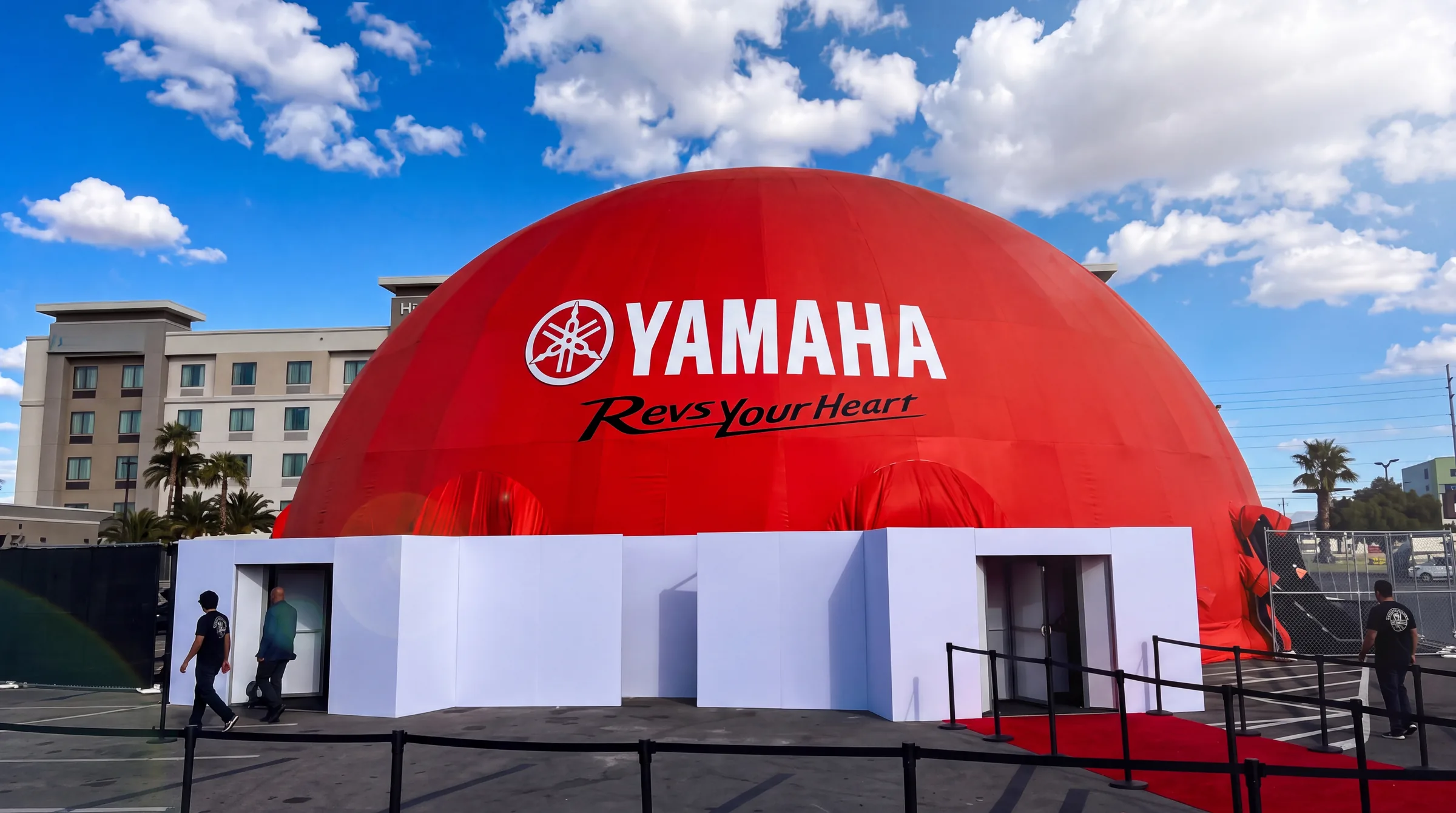
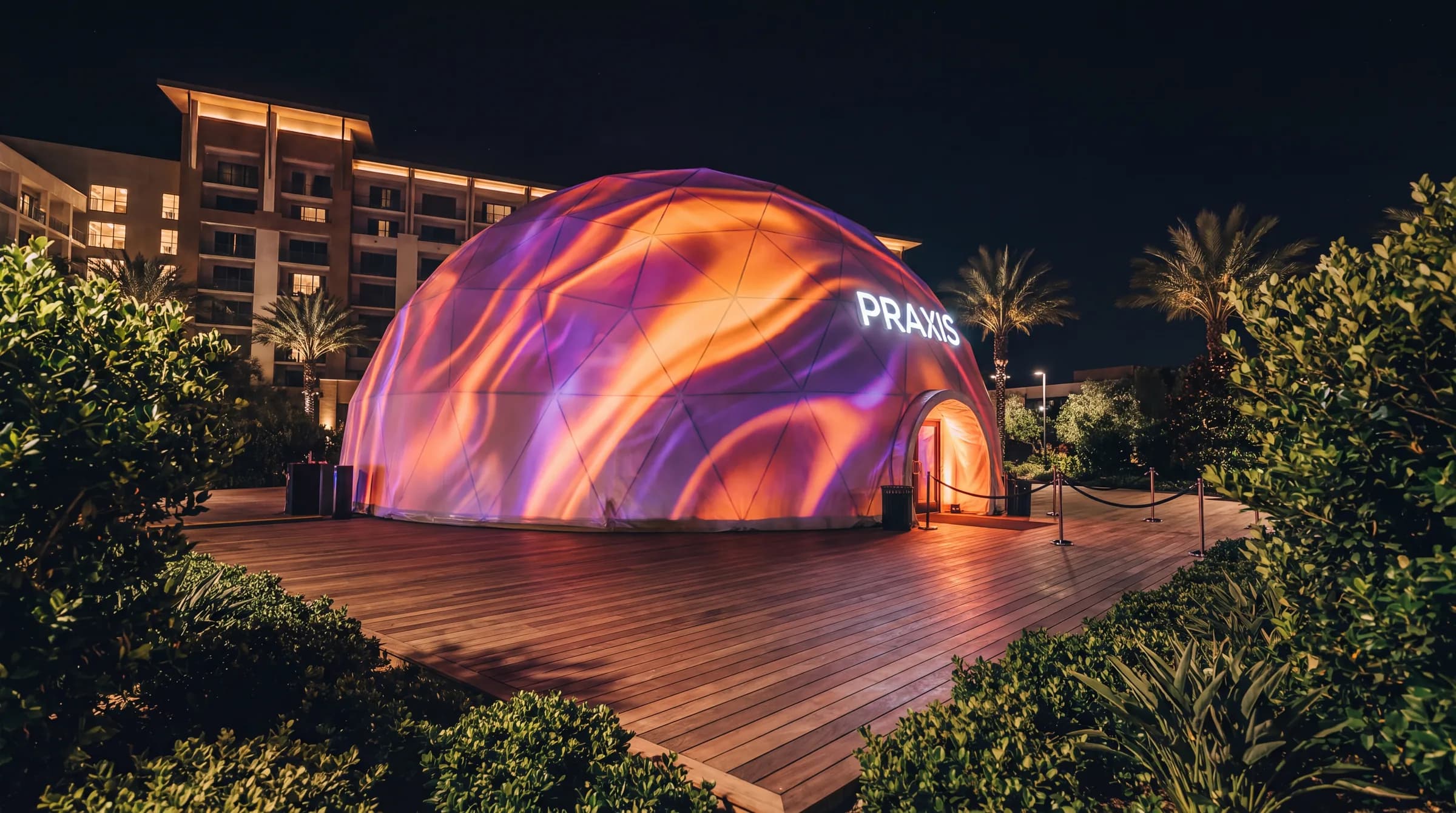
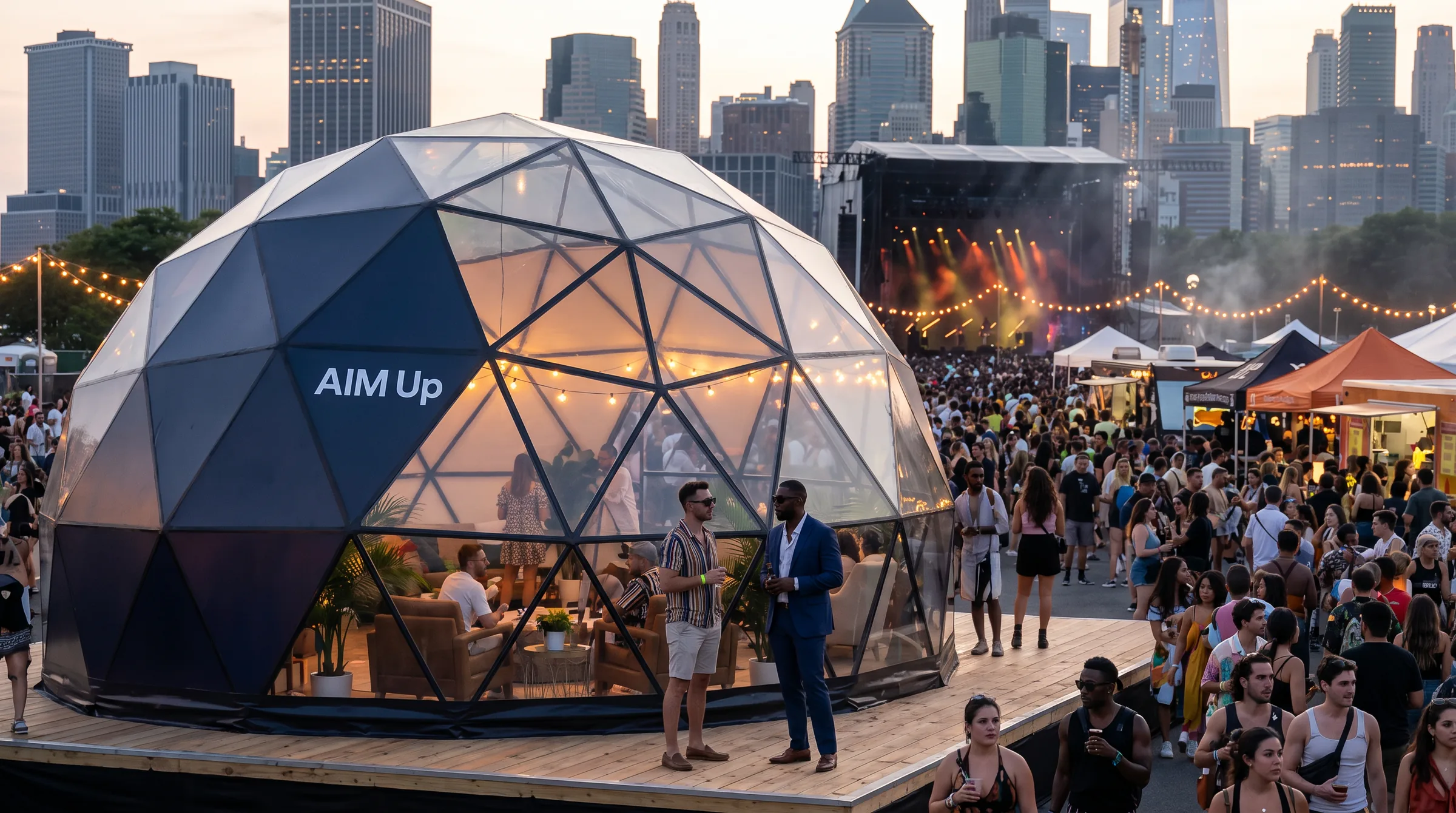
A geodesic dome is the most recognizable shape on this list, and it carries the brand on every side. Printed and branded covers are available and reusable across events and roadshows, and interior projection can carry the campaign inside as well.
Alongside our geodesic frames, inflatable projection domes are available for activations and immersive shows. Tell us about the program and we’ll recommend the structure and system that fit it.
Before you request a quote
What to send with an activation brief
The details that let a supplier recommend a format and quote it for each stop.
01
Dates, cities, and how long the activation runs at each
02
Site type: plaza, festival pad, parking lot, or indoor hall
03
What visitors do inside, and how many at a time
04
Branding: exterior, interior, or both, and whether covers should be reusable
05
Media: projection, screens, sound, or a timed reveal
06
Touring plans and storage between stops
Ready to talk about your project?
A free 30-minute video call with Erick, our cofounder. Or call (866) 767-3117.
Questions, answered
Common questions
What structure is best for a brand activation?
The one that fits the idea. Tents and clearspan structures suit big, flexible footprints; containers suit an industrial look; modular pavilions look like finished buildings; inflatables deliver bold sculptural shapes; domes combine a landmark silhouette with an enclosed room and optional projection. Start with what visitors should do inside and how the structure should read from outside.
Tent or dome for an activation?
A tent is the flexible, familiar choice when footprint and budget lead. A dome makes sense when the structure itself should draw people in: its shape is recognizable across a site, the interior is open, and covers and projection can turn the whole building into the brand.
Container or inflatable?
Containers suit industrial, retail-style activations and lockable setups, but they’re heavy to move. Inflatables are light, sculptural, and fully printable, and many designs need blowers and power throughout the event. The brand’s look and the site’s logistics usually decide it.
When is an enclosed structure worth it?
When the experience depends on control: projection or screens that need darkness, sound that shouldn’t leak, a timed reveal, or managing how many people are inside at once. Open structures are better for quick, high-traffic sampling.
What works for a touring activation?
A format that sets up the same way every time and travels efficiently, with a reusable printed exterior. Plan transport, storage between stops, and each city’s permit requirements before the tour is booked.
Still have questions? Book a call with our team →
Looking for a permanent dome home or a glamping dome instead? See our dome kits.
Book a call
Book a call with our team
Choose a day and time that works for you. We’ll connect over a quick video call to discuss your goals and how we can help.
- Event & projection rentals with delivery, setup, and teardown
- Straight answers on pricing, permits, and timelines
Prefer the phone? (866) 767-3117
Start your project
Discuss your brand activation
Tell us the idea, the cities, and the dates. We’ll recommend the structure that fits and quote it for each site. We respond to inquiries or return calls within 24 hours. Quote preparation time depends on your project's scope and complexity. We'll discuss the expected timeline when we connect.
Prefer to talk it through?
A free 30-minute video call with Erick, our cofounder. Or call (866) 767-3117.